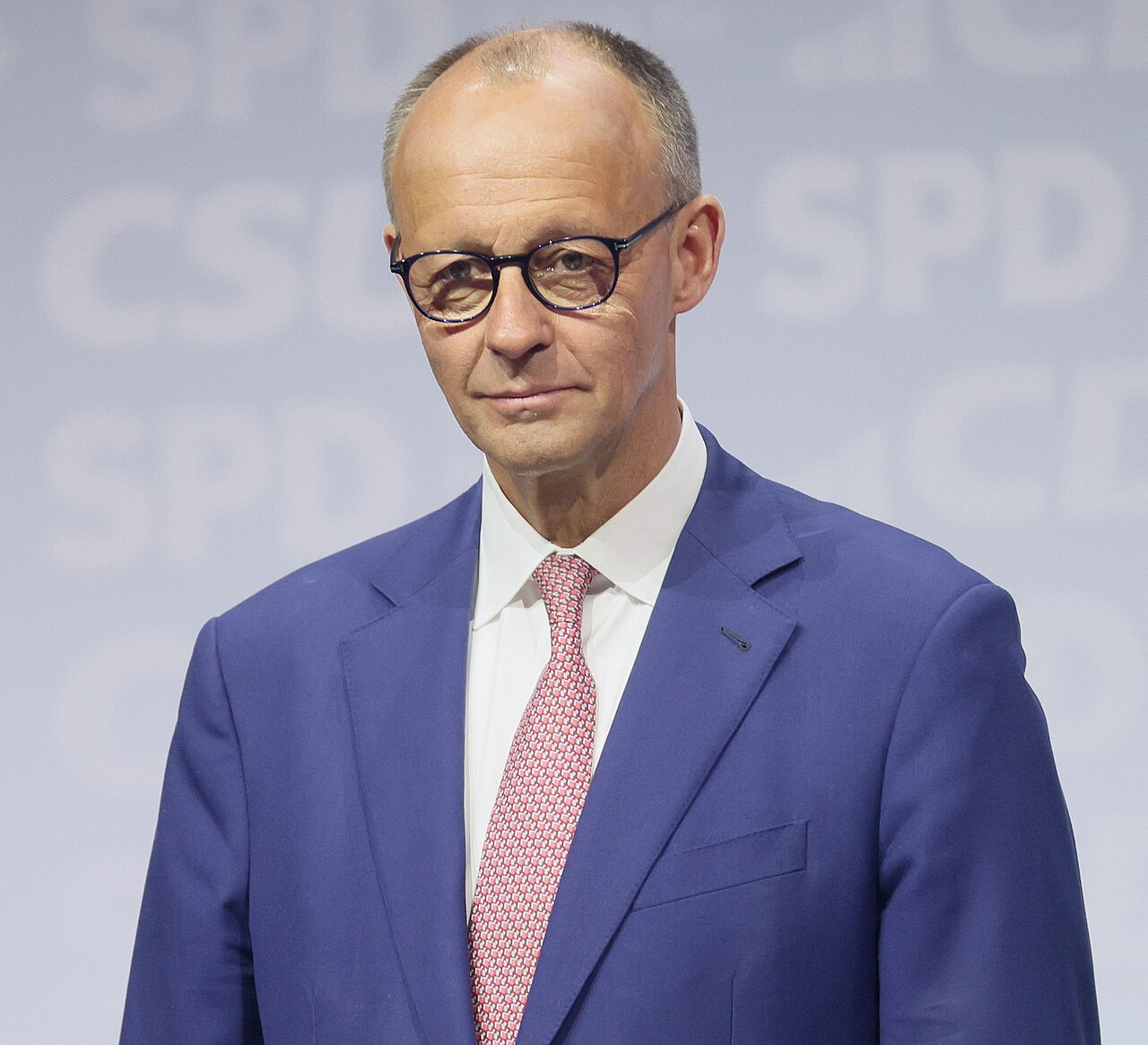
The Credibility Chasm: Merz, Debt, and Voter Perception in Germany
Recent political developments in Germany have cast a spotlight on the CDU's role in opposition and, more specifically, on the leadership of Friedrich Merz. Following the release of the
ZDF Politbarometer in mid-March (often referenced in discussions around `zdf merz 18. märz`), a significant portion of the German electorate feels that Merz and the CDU/CSU have engaged in voter deception. This perception stems from a notable shift in the party's stance on additional national debt, a move that has profound implications for trust in politics and the future trajectory of the Christian Democratic Union.
Before the last federal election, Friedrich Merz and the CDU/CSU vehemently rejected the idea of incurring substantial new debt. However, after the election, their position pivoted, citing the "current political situation" as justification for accepting a credit-financed financial package. This policy U-turn has not gone unnoticed by the public. According to the ZDF Politbarometer März II 2025, a striking 73 percent of respondents believe that the Union and Merz deceived voters with this change of heart. What's particularly damaging is that this sentiment isn't confined to opposition voters; even 44 percent of CDU/CSU supporters share the view that their party leaders misled them. Only a quarter of those surveyed found the accusation unfounded.
This widespread perception of voter deception highlights a critical challenge for any political party: maintaining credibility. When a party shifts its core economic stance so dramatically, especially after explicitly campaigning on the opposite position, it risks alienating its base and eroding the trust of the broader electorate. For the CDU, a party traditionally associated with fiscal conservatism, such a move is particularly problematic. It raises questions about the sincerity of pre-election promises and the strategic calculations underpinning policy decisions.
The immediate fallout from this perceived shift has directly impacted Friedrich Merz's standing. His approval ratings as a potential Chancellor have taken a significant hit. Compared to early March, the number of people who would view Merz as Chancellor favorably dropped from 44 percent to just 37 percent. Conversely, those who would view it negatively rose from 50 percent to 53 percent. Furthermore, confidence in his ability to perform well as head of government also declined sharply, from 53 percent to 45 percent, while those expecting a poor performance increased from 37 percent to 44 percent. This dip in public confidence is a serious blow to Merz's ambitions and the CDU's prospects, underscoring how deeply rooted the issue of trust is in electoral success. For more on this, see
Merz Under Fire: 73% See Voter Deception in CDU Shift and
Friedrich Merz's Approval Plummets: Kanzler Hopes Diminish.
ZDF's Lens: Framing the CDU's Conservative Image
Beyond the raw poll numbers, the role of media in shaping political narratives also comes under scrutiny. A critical perspective on recent ZDF coverage, particularly a summer interview with Friedrich Merz, suggests that the broadcaster may, inadvertently or otherwise, be assisting the "Rainbow-CDU" in presenting itself as the guardian of a conservative German identity. The interview, conducted by Theo Koll at the historic Arnsberger Kloster Wedinghausen – a setting described as "For a CDU chairman, the world is actually in order here" – began with a question implying the CDU's potential shift towards a more conservative stance: "Where is the CDU developing, will it become significantly more conservative?"
Critics argue that such a question, and the overall framing of the interview, was overly gentle and missed an opportunity for sharper journalistic inquiry. Instead of challenging the CDU's recent actions or questioning the sincerity of its opposition, the interview style is seen by some as implicitly validating the party's claims to a "conservative German brand core" – a position some argue is either vacant or increasingly occupied by other parties.
For an opposition leader like Merz, an interview on a major public broadcaster like ZDF is a crucial platform. However, if the questions lack incisiveness and fail to press on contentious issues – such as the perceived voter deception or the effectiveness of the party's opposition work – it can create a skewed public perception. This isn't just about media bias; it's about the complex interplay between political messaging, journalistic responsibility, and public reception. The way a leader is portrayed can significantly impact their standing, especially when facing intense scrutiny over policy reversals and the performance of their party.
Opposition in Question: The CDU's Role and Effectiveness
The challenges facing Merz and the CDU extend beyond policy U-turns and media portrayals; they also concern the fundamental effectiveness of the party in its role as the largest opposition faction in the Bundestag. Critics argue that for over a year and a half, the CDU has effectively "refused to work" as a robust opposition party, often signaling "tolerance" or "acquiescence" to the governing "Rainbow government." This perceived passivity has allowed numerous laws to be "rushed through" parliament, sometimes at the last minute, with seemingly little resistance from the CDU.
An effective opposition is crucial for a healthy democracy. Its role is to scrutinize government policy, propose alternatives, hold the government accountable, and provide a clear choice for voters. If the largest opposition party fails to perform these duties robustly, it creates a void. In some instances, as the reference context suggests, it was left to parties like the AfD to resort to parliamentary tactics, such as the "Hammelsprung" (a procedural move to force a roll-call vote, often used when a quorum is in doubt), to highlight issues of legislative process or insufficient attendance.
Merz's assertion that the CDU measures itself not against the AfD but as the "largest opposition faction in the German Bundestag" is challenged by this perspective. While numerically true, the criticism suggests that mere numerical size does not equate to effective opposition. The "conservative German brand core" that the CDU traditionally embodies is seen by some as having become "vacant" or "partially occupied by the AfD" due to the CDU's perceived reluctance to fully embrace its role as a sharp and unyielding counterweight to the government. This situation creates a strategic dilemma for the CDU: how to distinguish itself, especially on conservative principles, without alienating moderate voters or being seen as validating the AfD.
Navigating the Political Landscape: Challenges for Merz and the CDU
The confluence of these factors – the credibility crisis stemming from the debt policy shift, the impact on Merz's personal approval, and the ongoing debate about the CDU's effectiveness as an opposition force – presents a formidable challenge for Friedrich Merz and the entire Christian Democratic Union.
*
Rebuilding Trust: The most immediate task is to address the perception of voter deception. This requires clear communication, perhaps acknowledging the past stance while transparently explaining the necessity of the current decision, rather than simply attributing it to "the current political situation." Consistency in messaging and action will be paramount.
*
Defining Opposition: The CDU needs to clearly articulate its vision for Germany and how it intends to challenge the government constructively. This means identifying key policy differences, proposing detailed alternative solutions, and holding the government accountable on issues that resonate with the public, rather than merely signaling acquiescence.
*
Reclaiming Identity: The debate over the "conservative German brand core" is existential for the CDU. It needs to define what modern conservatism means in Germany and how it differentiates itself from the AfD, offering an attractive and viable political home for center-right voters. This involves both strong policy positions and a clear rhetorical boundary.
For voters, these developments underscore the importance of critical engagement. Scrutinizing party manifestos, monitoring policy implementation, and evaluating the consistency of political leaders are crucial for making informed decisions. It's also vital to consider the role of media in shaping public narratives and to seek out diverse sources of information.
Public Opinion & Future Prospects: What the Polls Reveal
The ZDF Politbarometer also offers a broader snapshot of the German political landscape, providing context for Merz's recent decline. While Defense Minister Boris Pistorius continues to hold the top spot with a strong average rating of 2.0 (on a scale of +5 to -5), other key figures show mixed results. Gregor Gysi (1.1) and Lars Klingbeil (0.7) reappear positively. However, several other prominent politicians, including Robert Habeck (-0.2), Annalena Baerbock (-0.5), Markus Söder (-0.6), and Olaf Scholz (-0.7), also register negative approval ratings, indicating a general dissatisfaction with the political class, particularly among governing parties.
Friedrich Merz's significant drop to -0.5 (from 0.1) places him firmly in this negative territory, suggesting that his leadership is now viewed with more skepticism than before. While Sarah Wagenknecht (-1.4) and Alice Weidel (-2.5) remain at the lower end, Merz's trajectory is concerning for a leader positioning himself for a future chancellorship.
These numbers are more than just statistics; they reflect the shifting sands of public opinion and the immense pressure on political leaders to deliver, maintain trust, and articulate a compelling vision for the nation. For Merz and the CDU, the coming months will be crucial in demonstrating their capacity to lead effectively, both in opposition and as a potential future government.
The current situation calls for a strategic recalibration for Friedrich Merz and the CDU. The deep chasm of perceived voter deception, coupled with questions about their effectiveness as an opposition party, presents a significant hurdle. Rebuilding trust, clearly defining their role, and offering a distinct and credible conservative vision for Germany will be essential if they are to regain the confidence of the electorate and position themselves successfully for future elections. The political climate demands not just numerical opposition, but a clear and principled alternative that resonates with the hopes and concerns of the German people.